Downloadable Files
You can download Qualoth for free from the bottom of this page.
Realistic Cloth Simulation and Animation
Qualoth is a cloth simulation plugin for Autodesk Maya that creates realistic fabric movement, folds, and wrinkles. It uses an advanced physical model and a fully multi-threaded solver to handle complex cloth animations with high computational speed.
Qualoth is a cloth simulation tool made by FXGear. Studios use it to create realistic cloth animations for their projects. It helps artists control how clothes move and interact with other objects. It also works with clothing design tools, making it easier to create detailed animations with fewer problems.
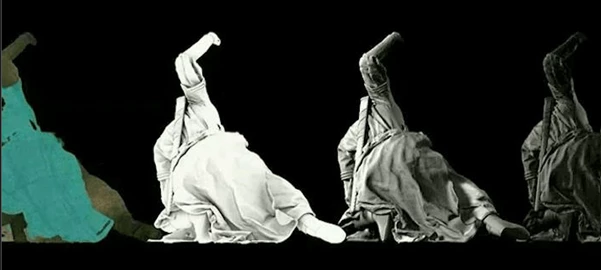
Realistic Cloth Animation with Qualoth
Qualoth uses a physical model designed specifically for fabric materials. Unlike simulation methods based on spring networks or particle systems, its model considers the physical behavior of cloth, which differs from elastic materials such as rubber.
This approach produces natural wrinkles, folds, and movements that respond to the simulated conditions. It is particularly important when animating garments that need to bend, fold, or move realistically.
The plugin also uses a fully multi-threaded solver to improve computational performance. Combined with its collision handling system, this helps artists work with complex cloth simulations without spending excessive time troubleshooting.
Key Simulation Features
Robust Collision Handling
Cloth simulation often involves contact between fabric and other objects. Qualoth includes a collision handling system designed to manage these interactions reliably.
This is important for animations where clothing moves around a character or fabric interacts with objects in a scene. Reliable collision handling helps maintain consistent cloth behavior throughout the simulation.
Goal Constraints and Animation Control
Qualoth provides several methods for controlling both the simulation and its resulting caches.
Artists can add goal constraints to cloth objects and animate their goal shapes using keyframes. The attraction force of these constraints can also be painted individually across the vertices of a cloth surface.
This gives artists more control over specific areas of fabric without relying entirely on physical simulation.
For instance, an artist can guide the movement of selected cloth regions while allowing other areas to respond naturally to the simulation.
Partial Re-Simulation
Qualoth supports partial re-simulation, which is helpful when only a small section of an existing cloth animation needs adjustment.
Rather than calculating the entire cloth simulation again, artists can select specific vertices for re-simulation while keeping the remaining areas unchanged.
This feature reduces unnecessary calculations and makes it more practical to correct local problems in a cloth animation.
Importing Garments from Marvelous Designer
Qualoth supports importing metadata from Marvelous Designer, allowing garments created in a dedicated 3D clothing design tool to be transferred into the Maya simulation workflow.
During import, Qualoth automatically converts several important garment properties:
Physical parameters: Material properties used for cloth simulation.
Flat pattern shapes: The original pattern geometry used to construct garments.
Stitching setup: Information about how garment patterns are connected.
After conversion, the imported garments are ready for simulation with Qualoth.
This integration is valuable for projects where clothing is designed in Marvelous Designer but needs to be animated and simulated inside Maya.
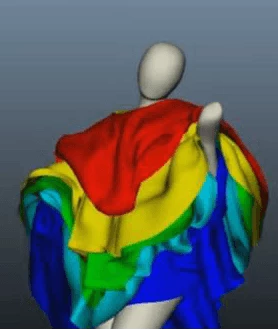
Cloth Interaction with Maya Fluid
Qualoth supports bidirectional interaction with Maya Fluid, allowing cloth and fluid simulations to influence one another.
This connection supports different types of cloth movement, including:
Flags: Creating realistic flag movement in simulated wind.
Underwater cloth: Simulating fabric movement in water.
Wind-driven garments: Producing natural waving and flapping effects on clothing.
By combining cloth simulation with Maya Fluid, artists can create fabric animations influenced by environmental forces.

Files Password : gfxplugin.com OR 123456