Downloadable Files
You can download Movie Density DCTL for free from the end of this page.
Create Rich Film Color Depth in DaVinci Resolve
Digital cameras can produce incredibly clean, detailed images, but that clean digital look doesn't always have the depth and richness associated with film. Increasing standard saturation can make colors stronger, but it can also make them look overly bright, artificial, or visually flat.
Movie Density DCTL provides an alternative to enhancing saturation. Using a subtractive saturation method, Movie Density creates denser and deeper colors while also enhancing the separation between colors. This technique can give digital video more cinematic quality without the use of traditional saturation.
Why Color Density Matters
Color intensity and color depth aren't exactly the same. Traditional saturation controls generally increase color strength throughout an image. Push them too far and skin tones, skies, clothing, foliage, and other colorful elements can quickly become unnatural.
Film-inspired color density aims for something different. Colors can feel stronger while maintaining a sense of weight and depth.
Imagine a cinematic outdoor shot containing green trees, blue skies, warm skin tones, and colorful clothing. Standard saturation may simply make all these elements brighter and more intense. A density-based approach can help the individual colors feel deeper and more separated from one another.
This is especially useful for modern digital footage that looks technically excellent but feels too clean or lacks the complex color character you want for a cinematic grade.
Meet Movie Density DCTL
Movie Density DCTL is a color-grading tool designed to help create complex film-like color depth in digital footage. Its key technique is subtractive saturation, which adds cinematic saturation while simultaneously enhancing color separation across the scene.
Instead of building a complicated collection of adjustments just to achieve richer colors, the DCTL provides a more focused way to shape the density and character of the grade.
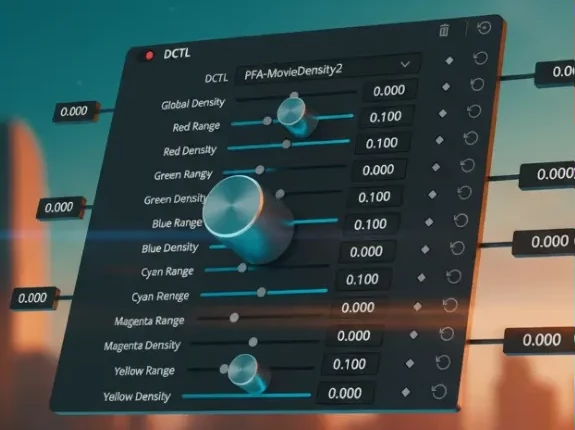
It also includes mask and range controls, letting you define the effect more precisely rather than treating every part of the image the same way.
Subtractive Saturation
The central feature of Movie Density DCTL is its subtractive saturation technology.
Rather than producing the bright, sometimes artificial look of aggressively increasing standard saturation, the tool creates deeper, richer colors. This can help digital footage move toward the heavier and more complex color response often associated with film.
Enhanced Color Separation
Movie Density DCTL also improves color separation throughout the scene.
Better color separation makes different hues easier to distinguish and gives the image greater visual complexity. This is especially noticeable in scenes with several similar or competing colors.
For example, greens, cyans, blues, reds, and warm skin tones can feel more individually defined instead of blending into a generally saturated image.
Richer Film-Like Color Depth
One of the tool's main purposes is to give digital footage greater color depth.
This can be useful for narrative films, commercials, music videos, cinematic YouTube content, and other projects where the color grade needs more character than a straightforward digital image provides.
Built-In Mask Controls
Not every area of an image needs the same amount of processing. Movie Density DCTL includes built-in mask controls that help define where the effect should influence the image.
This gives colorists more control when building a specific look and makes it easier to prevent the density adjustment from becoming excessive in areas where a subtler result is preferred.
Range Controls
Range controls provide another level of refinement.
They let you define the color treatment more carefully, helping you shape the final result instead of applying an uncontrolled global adjustment. This is particularly valuable when creating a cinematic look that still needs to feel balanced and believable.
Where Movie Density DCTL Can Be Useful
The tool can fit into many different grading workflows. A cinematographer working with clean digital footage can use it to introduce more visual weight before applying a final creative look. A music video colorist can use richer density to create stronger, more stylized colors without relying entirely on conventional saturation.
It can also help in narrative work where different colors need to stay clearly separated while still contributing to the scene's overall mood.
Movie Density DCTL can also serve as a foundation for a larger grade. You can establish the overall density and color character first, then refine individual colors or apply a creative LUT afterward.
Tips for More Natural Results
Start with a restrained adjustment rather than immediately pushing the effect to its maximum. Film-like color usually benefits from balance, and excessive density can become just as distracting as excessive conventional saturation.
Pay particular attention to skin tones. Even when the overall scene benefits from stronger color density, faces should still remain believable and appropriate for the intended look.
Also evaluate several areas of the frame rather than focusing on a single color. Look at skin, foliage, skies, highlights, shadows, and strongly colored objects together to make sure the grade remains cohesive.
Use the mask and range controls when the global effect feels too strong. More targeted adjustments can often produce a more polished result than simply reducing or increasing the entire effect.
Finally, judge the result in context with the rest of your grade. Movie Density DCTL can establish rich color depth, while additional grading tools can handle contrast, individual color corrections, or the final creative treatment.
A Different Approach to Cinematic Saturation
Movie Density DCTL is designed for artists and filmmakers who want more than simply increasing color intensity. Movie Density uses a subtractive saturation approach to produce greater depth in color, enhanced separation, and a more film-like look.
The combination of color-density processing with built-in mask and range controls also gives users room to refine the effect for different footage and creative styles.
For digital footage that feels too clean or lacks the color complexity you want, Movie Density DCTL offers a focused way to add depth to the grade while keeping the final look under your control.

Files Password : gfxplugin.com OR 123456