Downloadable Files
You can download Substance 3D Designer for free from the end of this page.
Turn Ideas Into Procedural Designs
Creating complex materials from scratch can be a difficult process. Especially when you need full control over color, pattern, surface, and variation. Adobe Substance 3D Designer provides a flexible new way to create textures and materials using procedural, node-based tools.
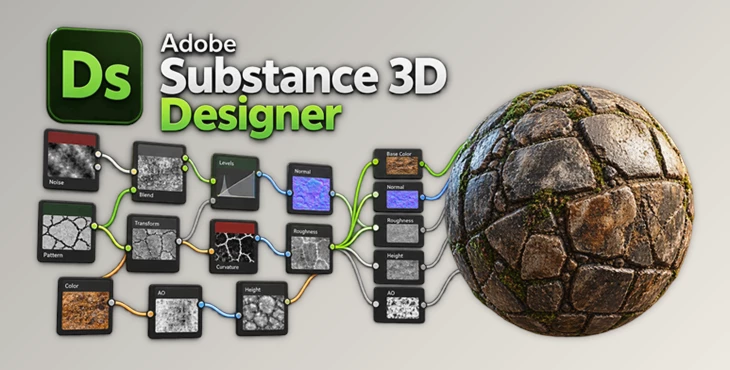
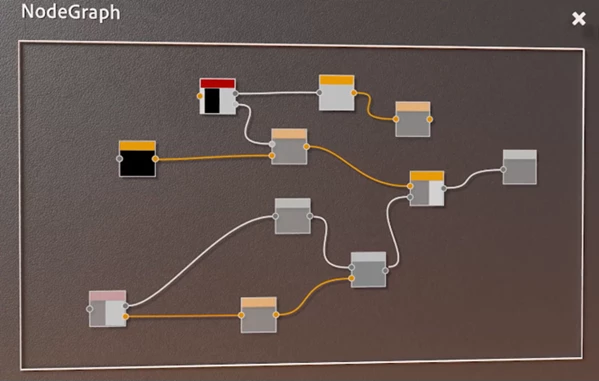
Unlike traditional image editing, where each operation applied to an image is permanent, in Designer materials are created using a series of connected nodes. This allows you to go back into nearly any part of your material and edit a parameter, replace a pattern, or change a surface property without having to regenerate the entire material.
But Designer isn’t just great for materials. It can also be used for procedural patterns, image filters, environment lights, and all sorts of other pieces that fit into today’s 3D production pipeline.
What Is Adobe Substance 3D Designer?
Adobe Substance 3D Designer is a professional tool for creating procedural content. Using a visual node editor, artists and designers can create complex materials by linking operations, parameters, patterns, filters, noise, and other elements together.
It’s like creating a material out of smaller pieces. One set of nodes can define the overall shape of a surface, another can add in smaller details, and other nodes can be used for properties like color and surface type.
Because the workflow is non-destructive, these parameters can be adjusted. Instead of producing one static product, you can produce a system that can generate many different products.
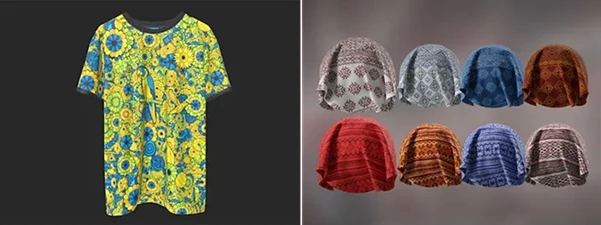
A procedural material might allow for changes to its color, weave, pattern, or surface by using parameters. This can be very useful when working with a number of related materials, as you won’t have to create each material by hand.
Why Procedural and Node-Based Creation Matters
One of Designer’s most important concepts is procedural creation. Rather than manually painting every detail into a final texture, you can define rules and relationships that generate the result.
Imagine creating a patterned surface. Instead of manually repeating every individual element, you can build a procedural pattern and then control its arrangement and appearance through nodes. Randomizable noises and filters can introduce additional variation and complexity.
The result is a workflow that remains flexible throughout the creative process. If something does not look right later, you can return to the relevant part of the graph and refine it.
This is particularly valuable during experimentation because you can explore different combinations without destroying previous work.
A Professional Tool for Material Authoring
Adobe Substance 3D Designer provides the tools needed to build sophisticated procedural materials while giving artists detailed control over the final appearance.
Its technology is used by professionals across multiple industries, and its node-based workflow is designed for both creative experimentation and structured production pipelines.
Designer also gives users opportunities to learn from existing content. Thousands of community materials and materials from the Substance 3D Assets library can be explored to understand how their node graphs are constructed. Existing materials can also provide a starting point for new projects.
Features
Powerful Node-Based Workflow
Designer uses a non-linear, node-based system for content creation. Individual operations remain connected inside a graph, allowing you to revisit and adjust earlier stages of the design.
This makes experimentation easier because changing one part of the graph can influence the generated result without forcing you to rebuild the entire material.
Extensive Content Library
The software includes hundreds of nodes, filters, procedural patterns, and randomizable noises.
These building blocks can be combined in countless ways. Simple shapes and noises can gradually be transformed into sophisticated surface structures, patterns, and visual details.
Parametric Material Creation
The designer gives you detailed control over material properties such as:
- Color
- Weave
- Surface finish
- Patterns
- Procedural variations
Using parametric materials makes it easier to create multiple looks from the same underlying setup while maintaining photorealistic quality.
More Than Material Creation
Although material authoring is one of its central strengths, Designer goes beyond traditional 3D textures. Its toolset can also generate patterns, image filters, lighting content, and other procedural assets.
This versatility makes it useful when a project requires more than a single material-generation workflow.
HDR Lighting Creation
Designer can be used to build parametric lighting stages using procedural lights or 360-degree images.
This gives artists another way to create and control lighting resources while keeping the procedural philosophy of the software.
Professional Color Management
Support for Pantone and OpenColorIO helps provide more controlled color workflows, particularly when Designer is being used as part of a larger professional production pipeline.
MDL Support
Designer includes support for creating MDL materials through a dedicated shader graph.
This expands the possibilities for artists who need more advanced material and shader-authoring workflows.
Open Substance 3D Ecosystem
Materials and filters created in Designer can easily move into other Substance 3D applications. This makes Designer particularly useful as an authoring component within a broader Substance 3D workflow.
APIs and Pipeline Customization
Designer provides an extensive collection of APIs for users who want to extend their production workflow.
These APIs can be used to build and share plugins or develop custom tools and utility graphs, helping studios and advanced users adapt Designer to their specific pipelines.
Where Can You Use Adobe Substance 3D Designer?
Designer is especially useful whenever a project requires flexible, reusable, or highly customizable procedural content.
You might use it to create a detailed surface material where the color and finish need several variations. Instead of producing each version independently, you can build one procedural graph and adjust its parameters.
For pattern-based designs, the same approach allows you to generate different arrangements and variations from a single system.
It can also help when creating image filters or procedural lighting stages, expanding its role beyond conventional texture authoring.
For artists learning procedural design, opening existing community and Substance 3D Assets materials can also be valuable. Studying their node graphs reveals how different operations are connected to create the finished result.
Professional Tips for Better Results
Start With the Large Forms
When building complex procedural materials, establish the main visual structure before concentrating on tiny details. Create the larger patterns and surface characteristics first, then gradually introduce smaller noises and refinements.
This can make your node graph easier to understand and give you more control over the overall appearance.
Use Variation Carefully
Randomizable noises are powerful, but adding too much randomness can make a material feel visually chaotic. Combine different procedural elements gradually and evaluate how each one contributes to the surface.
Controlled variation often produces a more convincing result than simply stacking many random effects together.
Keep Important Parameters Adjustable
One of the biggest advantages of procedural design is flexibility. When creating a reusable material, think about which properties you may want to change later.
Color, pattern characteristics, weave, and surface finish are good examples of properties that can benefit from remaining adjustable.
Study Existing Node Graphs
You do not always have to begin with an empty graph. Exploring community content and materials from the Substance 3D Assets library can help you understand different approaches to procedural authoring.
Look at how nodes are organized and how individual operations contribute to the final result. You can then apply those concepts to your own designs.
Build With the Pipeline in Mind
If your material or filter will eventually be used in other Substance 3D applications, consider that destination while building the graph.
Designer’s open ecosystem makes it easier to move created assets between Substance 3D tools, so planning for reuse can make the overall workflow more efficient.
Create, Adjust, and Explore Without Limits
Adobe Substance 3D Designer is a professional tool which combines procedural content creation, node-based content authoring, parametric materials, advanced color management, HDR lighting, MDL support, and pipeline customization into one package.
The key benefit of Designer is flexibility. Instead of a material being a static end result, in Designer a material can be part of a flexible system, where components can continue to evolve during the project.
Whether you are creating photorealistic materials, experimenting with procedural content, creating filters, lighting passes, or exploring complex node graphs, Designer provides a workflow geared towards creation and experimentation.
If you are interested in exploring more into procedural 3D content creation, experimenting with the filters, noises, nodes, and parametric functionality in Designer can be a great place to start.
 Substance 3D Designer (v16.0.7 for Win).rar (Size: 775.6 MB - Date: 10/11/2026 12:57:46 PM)
- Adobe - Substance 3D Designer v16.0.6 (Win).rar (Size: 775.5 MB - Date: 9/5/2026 12:02:10 PM)
- Adobe - Substance 3D Designer v16.0.5 (Win).rar (Size: 775.5 MB - Date: 8/27/2026 10:21:03 AM)
- Adobe - Substance 3D Designer v16.0.4.1 (Win).rar (Size: 772.6 MB - Date: 7/4/2026 12:06:06 PM)
- Adobe - Substance 3D Designer v16.0.3 (Win).rar (Size: 770.0 MB - Date: 5/30/2026 12:58:29 PM)
- Adobe - Substance 3D Designer v16.0.1 (Win).rar (Size: 769.9 MB - Date: 5/5/2026 3:27:45 PM)
- Adobe - Substance 3D Designer v16.0 (Win).rar (Size: 771.3 MB - Date: 4/15/2026 11:20:36 AM)
- Adobe - Substance 3D Designer v15.1.3 (Win).rar (Size: 839.9 MB - Date: 3/11/2026 4:07:24 PM)
- Adobe - Substance 3D Designer v15.1.2 (Win).rar (Size: 839.4 MB - Date: 2/5/2026 1:17:00 PM)
- Adobe - Substance 3D Designer v15.1.1 (Win).rar (Size: 839.3 MB - Date: 1/27/2026 8:00:41 AM)
- Adobe - Substance 3D Designer v15.1.0.10084 (Win).rar (Size: 839.0 MB - Date: 12/13/2025 1:55:28 PM)
- Adobe - Substance 3D Designer v15.0.3 (Win).rar (Size: 831.0 MB - Date: 10/25/2025 2:49:35 PM)
- Adobe - Substance 3D Designer v15.0.2 (Win).rar (Size: 831.0 MB - Date: 9/20/2025 12:51:32 PM)
- Adobe - Substance 3D Designer v15.0.1 (Win).rar (Size: 831.0 MB - Date: 7/22/2025 8:50:32 PM)
- Adobe - Substance 3D Designer v15.0.0 (Win).rar (Size: 830.8 MB - Date: 7/15/2025 1:56:41 PM)
- Adobe - Substance 3D Designer v14.1.2 (Win).rar (Size: 746.5 MB - Date: 4/16/2025 12:38:38 PM)
- Adobe Substance 3D Designer v14.1.1 (Win).rar (Size: 745.2 MB - Date: 2/24/2025 3:20:06 PM)
- Adobe Substance 3D Designer v14.1.0 (Win).rar (Size: 748.7 MB - Date: 1/15/2025 11:36:08 AM)
- Adobe Substance 3D Designer v14.0.2.8324 (Win).rar (Size: 1.1 GB - Date: 10/17/2024 11:58:29 AM)
- Adobe Substance 3D Designer v14.0.1 (Win).rar (Size: 651.8 MB - Date: 10/17/2024 11:58:09 AM)
- Adobe Substance 3D Designer v13.1.2.7745 (Win).rar (Size: 627.3 MB - Date: 10/17/2024 11:58:06 AM)
- Adobe Substance 3D Designer v13.1.1.7509 (Win) X64.rar (Size: 627.2 MB - Date: 10/17/2024 11:57:56 AM)
- Adobe Substance 3D Designer 14.0.0.8074 (Win).rar (Size: 1.1 GB - Date: 10/17/2024 11:57:46 AM)
- Adobe Substance 3D Designer v12.4.0 (Mac).rar (Size: 576.0 MB - Date: 10/17/2024 11:57:44 AM)
- Adobe Substance 3D Designer 12.2.0 Mac.rar (Size: 551.6 MB - Date: 10/17/2024 11:57:33 AM)
Files Password : gfxplugin.com OR 123456